
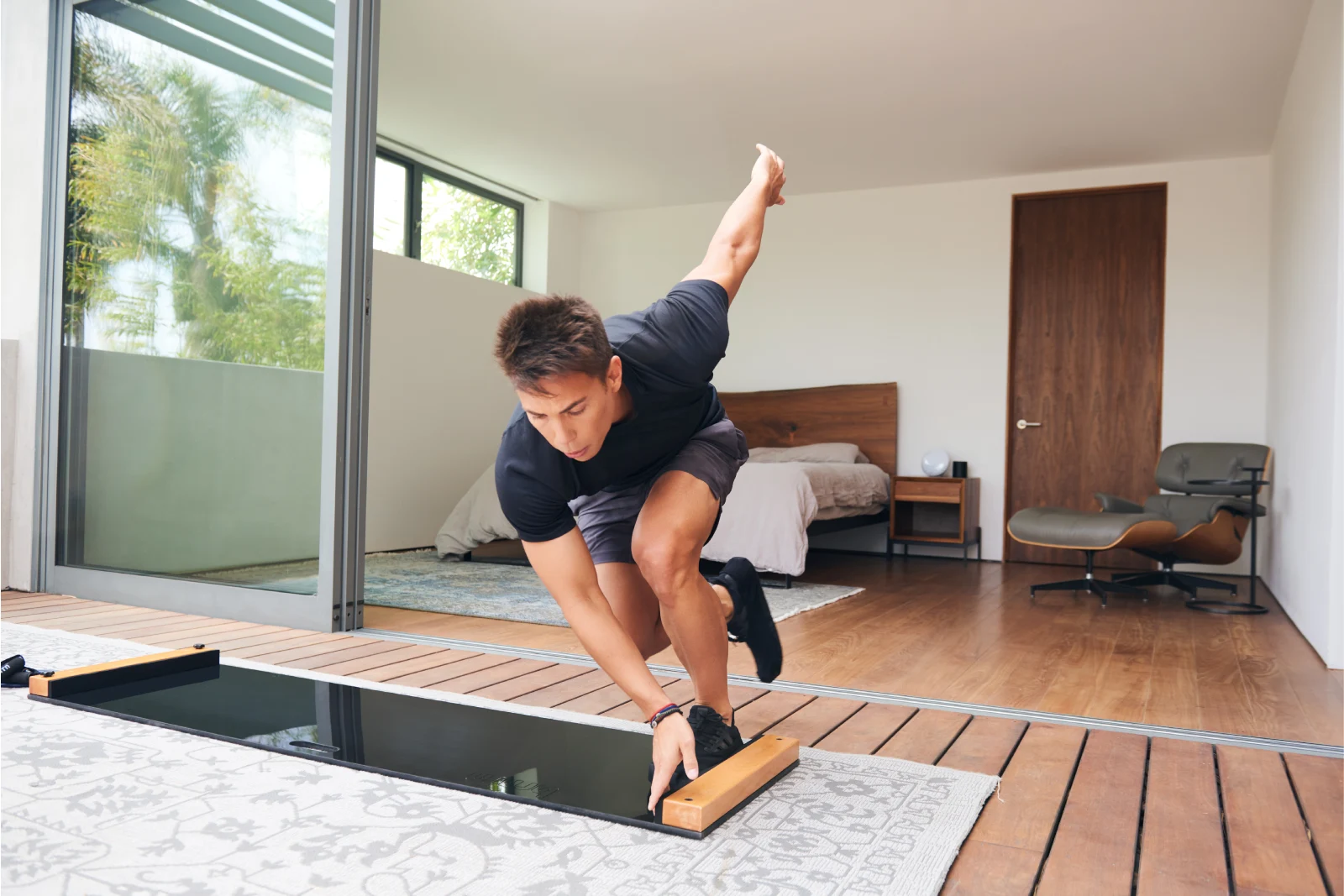
About six months after I retired I had this morning routine I was incredibly proud of.
Lemon water, 20 minutes of meditation, journaling, cold shower I dreaded every single morning, breathwork, gratitude practice, dynamic stretching, light mobility work. 90 minutes, start to finish, before I sat down to do anything that mattered. I'd read all the books, listened to all the podcasts, built the stack.
And I was perpetually behind before 9am.
Then one day - and I don't remember what triggered it, maybe a bad night of sleep or just running late - I skipped the whole routine, sat down at 6:30am, and started working on a keynote I'd been struggling with for a week.
Finished the outline in 45 minutes. Clean, sharp, the kind of thinking that usually took me three grinding afternoon hours to produce. Just because I'd caught my brain before the clutter got in.
And I thought - wait. This is exactly how training worked during competition.
Here's what my mornings looked like for 13 years as a competitive athlete, and what I've seen behind the scenes with hundreds of elite athletes since.
5am wake up, at the rink by 6, on ice by 6:45. No elaborate preparation ritual, no journaling about my feelings, no lemon water. Just get on ice while my brain was still half-asleep because that's when I had ice time and ice time wasn't negotiable. And those early sessions were often my best. Before the noise of the day, before anyone else's opinions could get in my head, before I had time to overthink anything.
That's the part nobody wants to hear, because it doesn't sell supplements or apps. Olympic morning routines are boring. They're built backward from one thing: the most important work of the day, done first, with zero friction between waking up and starting it. Eat something simple, get to the venue, warm up with the sport itself. Everything else - the recovery, the mobility, the mental work - gets scheduled around training, not in front of it.
And the real secret of the Olympic morning isn't even in the morning. It's in the night before. Early bedtime, consistent sleep, gear packed, plan known. When I was training for the 2002, 2006 and 2010 Games, the morning worked because there was nothing left to figure out. The whole day was built as a system: first session while fresh, recovery in the middle, second session, then sleep that protected the next morning. The morning was never a standalone performance. It was the output of the previous night.
The 90-minute routine I'd built after retiring was doing the opposite - I was preparing to perform during the hours I should've been performing.
The athletes I know who are still competing at the highest level don't do elaborate morning routines before training. They just go.
Before we get to what to add, here's what to cut, because this is where most mornings die.
Inputs. The phone is the big one. The moment you open email, news, or social, you've handed your freshest cognitive hours to other people's agendas. I never once started a training session by reviewing what strangers thought I should care about that day. Nobody at the Olympic level does. The first hour belongs to the work you decided on the night before, not to whatever arrived overnight.
Decisions. Every choice you make before the real work - what to wear, what to eat, what to do first - is a small withdrawal from the same account the work draws on. Elite training environments remove those choices on purpose. The schedule is set, the session is planned, you just execute. You can copy that for free.
And the performance of a routine. If you're doing a practice because it photographs well or because someone impressive swears by it, that's theater. Keep the two or three things that actually restore you. Cut the rest, or move them to after the work.
I tried the other extreme too, so I'm not going to pretend this is simple. Woke up and went straight into deep work every single day for about six months. Productive as hell. Also completely fried by the end of it - relationships suffered, health declined, getting things done but falling apart everywhere else.
The answer isn't 90-minute ritual OR wake-up-and-grind. It's sequencing.
The body and mind need recovery. Meditation, movement, whatever restores you - that stuff is real and it matters. The question is when. Doing it before your most important work means you're spending premium cognitive hours on maintenance. Doing it after means you're recovering when your brain needs recovery, and producing when your brain is primed to produce.
What I do now: night before, I set up the next morning's most important task. Everything ready to go, zero decisions required. Morning - that task gets done first. Phone in another room, no inputs, no checking anything. Usually 60-90 minutes before I surface.
Then the recovery stuff. Movement, meditation, whatever my body's asking for that day. It shifts - some mornings I need to move, some mornings I need stillness, some mornings I need to call someone and talk about nothing for 10 minutes. I let it be inconsistent because it should be.
The difference in output quality is not subtle. And I'm not working more hours - I'm working the right hours in the right order.
Two findings from the research line up with what I lived.
First, your performance in the morning depends less on the clock and more on your body's clock. A 2015 study in Current Biology tested athletes across the day and found that performance tracked their circadian phenotype - whether they were early, intermediate, or late types - and, even more strongly, how long they'd been awake. The "best" training time wasn't universal. It was individual.
Second, the grogginess you feel right after waking is real and temporary. Researchers call it sleep inertia, and a 2019 review in Nature and Science of Sleep lays out how it impairs alertness and performance in the period right after waking before it dissipates. Which means the first few minutes after your alarm are a terrible time to judge what kind of day you'll have, and a fine time to start moving through a zero-decision setup you built the night before.
Neither study says you need a 90-minute ritual. Both say you should know your own rhythm and protect the window when your brain is at its best. For me, that window was always early and it still is. Yours might not be. The principle holds either way: find your window, then put your most important work inside it.
Run this for five days and compare your output to last week.
The preparation is the night before. The morning is for the work.
This February I covered the Winter Games in Milan for Yahoo Sports, which meant early call times and a lot of mornings around athletes preparing to compete on the biggest stage of their lives.
What struck me was how little has changed since my racing days. The mornings I saw were quiet and simple. Fuel, venue, warm-up, go. Nobody was running a 90-minute optimization stack before an Olympic final. The elaborate routines live on social media. The real ones are stripped down to what the day's performance actually requires, and all the recovery work gets done after, when it can do its job.
Sixteen years after my last Olympic race, the best in the world still run the same sequence I learned coming up. Even in the Colorado Springs off season, when there was no ice time at all and every session was dryland, the structure never changed: wake early, do the hardest work first, recover after. That told me everything I needed to know about whether this principle has a shelf life.
It's most of what I talk about now when I speak to companies - executives don't need another productivity hack, they need the sequencing athletes use: protect the performance window, do the recovery after, prepare the night before. It's a core piece of the peak performance framework I teach teams.
I think about my younger self with that elaborate 90-minute ritual, feeling so virtuous about it, not realizing I was burning the best fuel on the warm-up lap.
At least that's what I've found so far. I change my mind about this stuff more often than I'd like to admit.
If this was useful, join the Hard Pivot newsletter for one idea like this every week, free: performance mechanics, not productivity hacks. And I go deeper on all of it in the book.
--AAO
Subscribe and get Chapter 1 of Hard Pivot free.
No spam. Unsubscribe anytime.