
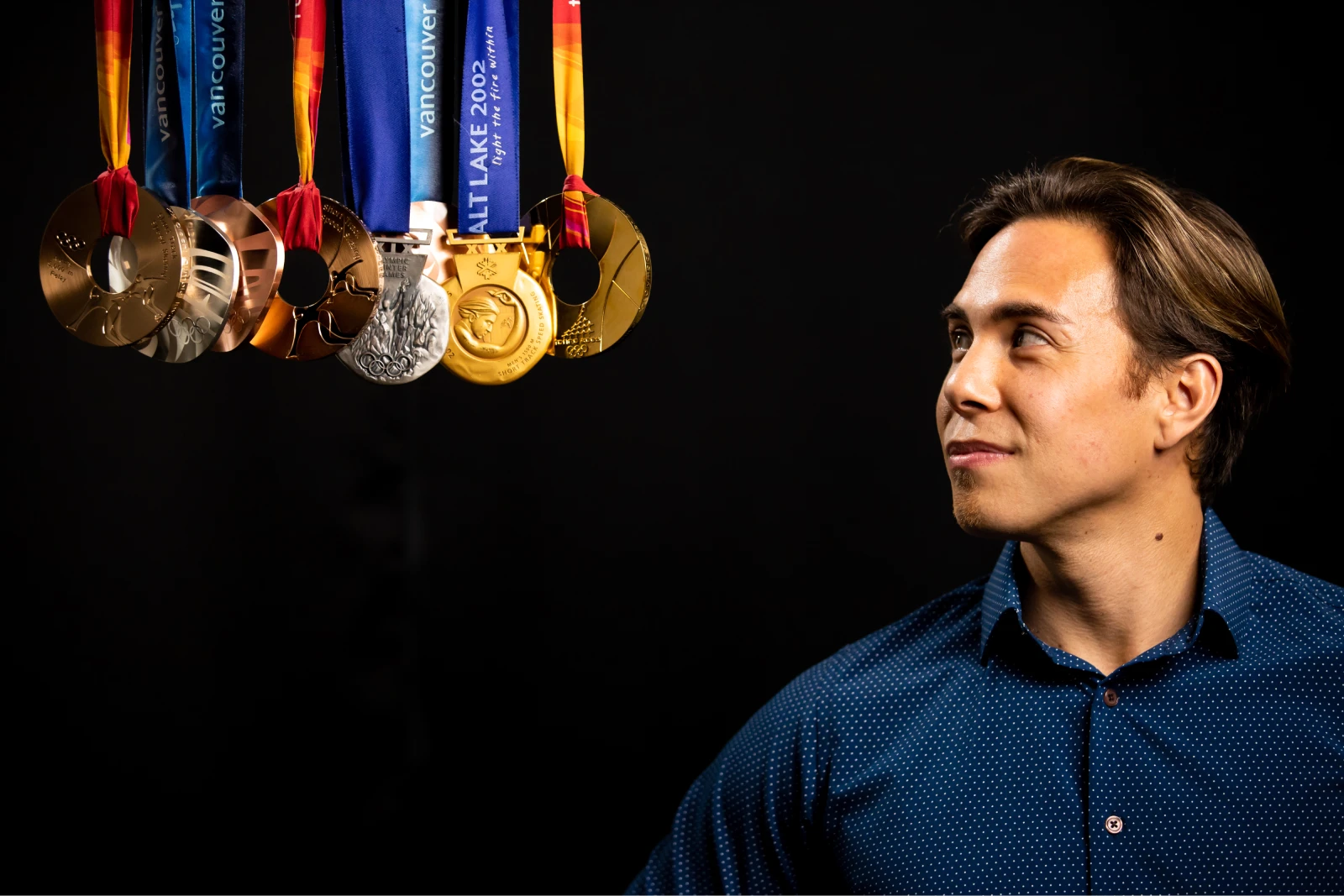
The first year after I retired from skating I was in a different city almost every week.
Minerals one day, tech the next, real estate by Thursday, then a flight to somewhere in Asia for a manufacturing deal I barely understood. Advisory roles stacking up. Speaking gigs. Consulting conversations where I was nodding along in rooms full of people who'd been in their industry for 20 yrs and I'd been in it for about three weeks.
My calendar was full. My phone was buzzing. I felt like I was building something significant.
I wasn't. I was making a millimeter of progress in a hundred directions instead of a mile in one. The busyness felt productive but nothing was compounding, nothing was reaching the point where it takes off, bc I kept splitting my attention across the next thing before the current thing had a chance to mature.
Procrastination wasn't the problem. Procrastination is a beginner's problem - you know when you're doing it, the guilt is right there on the surface, the fix is usually just starting. My problem was dispersion, and dispersion is a different animal bc it disguises itself as progress.
The irony is I already knew this. In short track speed skating, focus isn't a nice-to-have - it's survival.
You're on ice w/ five other skaters moving 30+ mph in a space the size of a hockey rink, and if your attention splits for even a fraction of a second you're hitting the wall or taking someone else out. There's no room for dispersion on the ice. You're either locked in on the race in front of you or you're finished.
I spent 15 yrs training that level of focus and then walked into my post-skating life and immediately abandoned it. Bc the constraints were gone. In sport, the rules force focus - one event, one race, one training block. In business & life, the constraints disappear and suddenly everything is possible, which sounds like freedom but creates exactly the conditions for scattershot results across the board.
The discipline I had on the ice wasn't about willpower. It was about architecture. The environment was designed so focus was the only option. When I left that environment I had to learn to build the constraints myself, and that took years of expensive lessons.
What makes dispersion dangerous is it specifically targets people who've already proven they can execute. If you've won before - in sport, in business, in anything - every new opportunity triggers a hit of anticipatory dopamine. Your brain says "I could crush this too" and it's probably right, but the fact you could do something well doesn't mean you should do it now.
I've watched this pattern w/ founders and executives over & over. The same drive that got them where they are - saying yes, pursuing every angle, maximizing optionality - becomes the exact thing preventing them from going further. Success brings opportunities, opportunities bring dispersion, dispersion quietly erodes the compounding that made you successful in the first place.
Charlie Munger put it simply: "The first rule of compounding: never interrupt it unnecessarily."
Most of us interrupt it constantly. We just call it "staying busy."
The test I use now is simple. Before adding anything to the plate: "Will this make my main thing go faster or reach completion sooner?"
If the honest answer is no, it doesn't belong. Not now. Maybe later, maybe never, but not now.
That sounds restrictive. It is restrictive. That's the point.
I apply this to how I invest too. I'm not trying to be in every deal or spread across every sector. I'm looking for the one founder, the one opportunity, where real involvement can compound into something meaningful. Dispersion in a portfolio is just as costly as dispersion in a career - it just takes longer to notice the damage.
I think about those first years after skating sometimes. All those flights, all those meetings, all that motion that felt like momentum. I was the busiest I'd ever been and building almost nothing.
The hardest skill for any high performer isn't starting. It's sustaining. Staying w/ the thing you already committed to when the next opportunity shows up and your brain starts whispering about how this new one could be even bigger.
I'm still working on it, honestly. The whisper hasn't gone away. I've just gotten a little better at not listening.
I write about this every week in Hard Pivot - performance, focus, the real mechanics of building something that compounds.
I go deeper on this in Hard Pivot.
--AAO