
Hundredths of a second on the splits that should've been dropping were creeping up. I could feel it before the numbers confirmed it.
This was during my training for Vancouver. I was skating six days a week, lifting four, doing plyometrics on what were supposed to be my "light" days, sleeping maybe five and a half hours a night. I was 26 and I believed more always meant better. That rest was something you did when the season ended, not during it.
My reaction time off the line felt sluggish. I was getting sick more often - a cold here, a sore throat there, the kind of low-grade stuff your body throws at you when it's screaming for a break and you won't listen.
I ignored all of it. Trained harder because I thought the problem was effort. That I just needed to push through whatever wall I was hitting and the performance would follow.
It didn't.
The thing about overtraining that makes it so insidious - it doesn't feel like too much. It feels like not enough. Your body is breaking down and your brain interprets it as laziness. You're slower so you train longer. You're foggy so you push harder. The solution to the problem IS the problem and you can't see it because the culture around high performance has convinced you that suffering and progress are the same thing.
My coach sat me down and said something I didn't want to hear. He told me I was the most disciplined athlete he'd ever worked with and my discipline was destroying me. I needed to recover with the same intensity I brought to training or my body was going to make the decision for me.
I hated hearing it. Felt like being told to quit. Like someone was giving me permission to be soft when the whole identity I'd built was centered around being the guy who never stops.
But the numbers didn't lie. My cortisol was elevated. Resting heart rate creeping up instead of down. Sleep quality was garbage even on the nights I got enough hours. Everything my body was telling me pointed in one direction and I'd been running the other way for months.
The word "recovery" is part of the problem. It sounds passive - laying on the couch watching TV, which is fine sometimes but that's not what I'm talking about. What turned things around was treating recovery as its own discipline. Something I planned, tracked, and executed with the same precision as my training blocks.
Active recovery days looked like low-intensity movement, stretching protocols that took 45 minutes, cold exposure, deliberate breathing work. Time outside where my brain could just be idle for a while without me shoving information into it.
The first week I committed to actual recovery days, I felt guilty the entire time. Like I was stealing from myself. By the third week my times started dropping again. By the sixth week I was skating faster than I had in months and I was training fewer total hours.
That math shouldn't work if you believe more equals better. But it works if you understand the body doesn't get stronger during training - it gets stronger during recovery from training. The workout is the stimulus. The adaptation happens after.
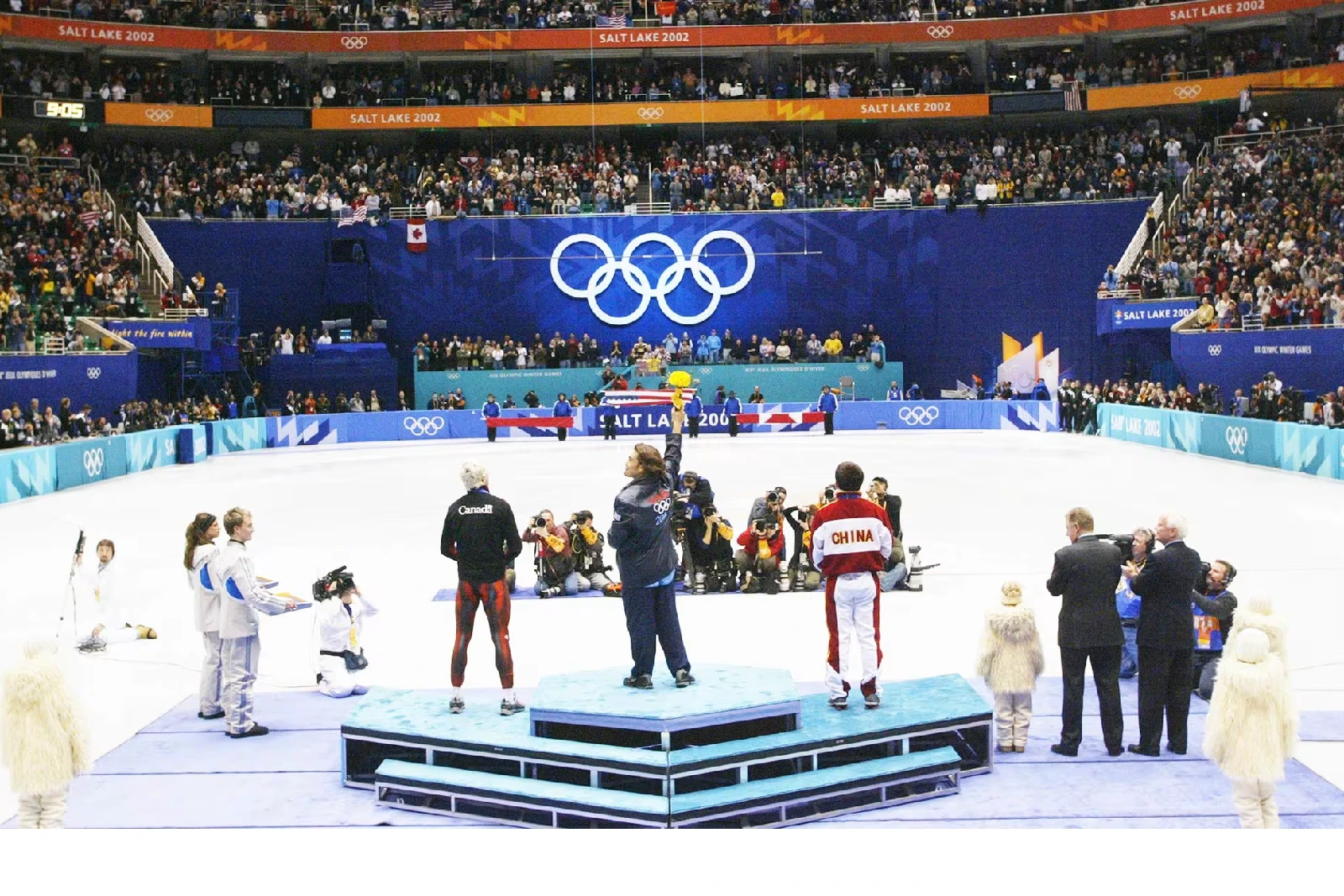
I spend a lot of time with corporate audiences now, and the parallel is hard to miss. The same pattern that had me overtraining at the Olympic Training Center is running in every company I walk into.
People grinding 60-70 hour weeks, wearing exhaustion like a badge, bragging about how little sleep they got, treating weekends as overflow workdays and then wondering why their thinking is getting worse and their decisions are getting slower.
I ask executives the same question my coach asked me - are you recovering with the same intensity you're working? The answer is almost never yes. They can tell me exactly what their work schedule looks like down to the 1/2 hour. Ask about their recovery schedule and it's blank. There isn't one. Recovery is whatever time is left over, which is usually none.
The highest-performing athletes I've been around - the ones who stayed elite for a decade or more instead of burning bright and flaming out - they all figured this out. Recovery wasn't the break between the real work. Recovery was where the output happened.
My recovery is non-negotiable at this point. Not because I'm competing anymore but because I learned the hard way what happens when you treat your body and brain like machines that don't need maintenance.
Sunday is protected. No work emails, no calls, no content creation, no strategic planning. Getting outside, moving slowly, being present with the people around me. Letting my nervous system come down from whatever the week threw at it so Monday I can show up sharp instead of showing up depleted and calling it dedication.
The specifics matter less than the principle. What matters is that you treat recovery as something you design and protect rather than something that happens accidentally in the gaps between obligations.
The hardest-working version of me was also the worst-performing version of me. That's a sentence I never thought I'd write but it's true. And my coach - the one who told me my discipline was destroying me - I think about that conversation more than almost any coaching I've ever received. He was the only person willing to say the obvious thing I couldn't see from the inside.
If you're rethinking how you balance intensity and recovery - I write about the real mechanics of performance every week in my newsletter.
I go deeper on this in Hard Pivot - the messy, honest version of what reinvention looks like.
--AAO
Subscribe and get Chapter 1 of Hard Pivot free.
No spam. Unsubscribe anytime.