
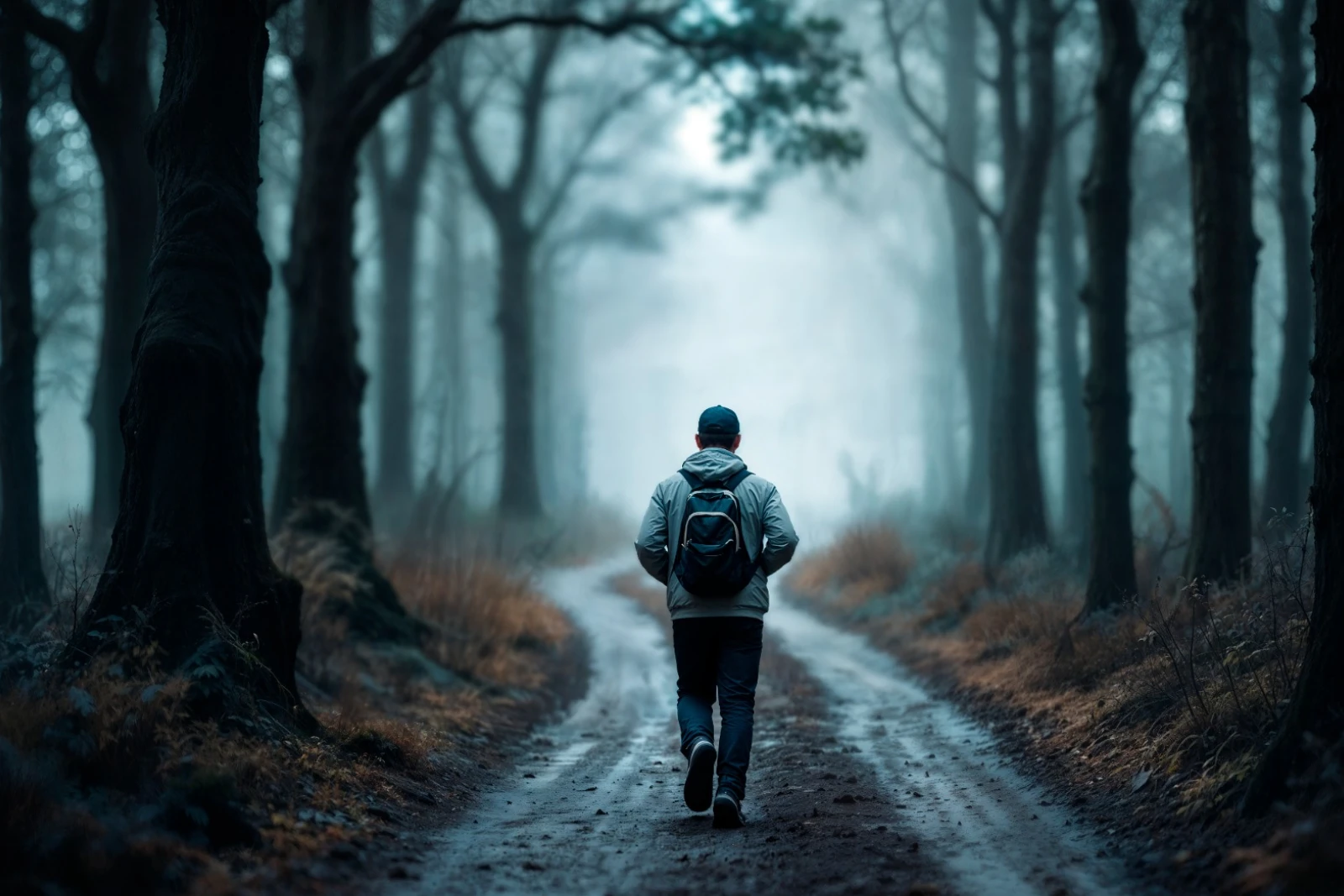
Near the end of my time at the cabin, a storm came in off the Pacific. Real Washington coast weather, the kind where the sky goes almost black in the middle of the afternoon and the rain arrives sideways off the ocean. I walked out and stood in it. That sounds dramatic written down. At the time it was not dramatic at all. I was a fifteen year old who had been alone too long and needed to feel something besides his own thoughts.
Some context, because the storm only matters if you know what carried me there. Not long before, I had been ranked first in the country. Then, at the February 1998 Olympic Trials, I finished dead last, sixteenth out of sixteen, because I had spent the season partying, skipping workouts, and acting like the rankings owed me something. My father Yuki drove me three and a half hours from Seattle to Iron Springs Resort on Copalis Beach, walked me to the door of a small cabin, said you are going to stay here until you figure out what you want to do with your life, and left. No TV, no phone, no car. Just me, a journal, and a stretch of Pacific Northwest coast that went dark by late afternoon.
I ran on that beach every day until my feet were shredded, not training for anything, just trying to outrun the question I had been dodging for months: do you even want this? For most of that week I had no answer. And then I was standing in a storm, soaked through, and something clarified. No choir, no lightning bolt revelation. More like fog thinning until I could see the next fifty feet of road.
What I saw was not what you would expect. It was not a vision of gold medals. It was a fear. And if you are stuck right now, if your goals feel hollow and your vision board feels like noise, I want to make the case that the thing you are missing might not be a dream at all.
Here is what clarified in the storm. I was not afraid of failing. I had already failed. Sixteenth out of sixteen is about as failed as Olympic Trials gets. What I was afraid of was something worse: becoming the person who had every gift and wasted all of them. The person who could have done something extraordinary and chose comfort instead. That fear was so specific, so physical, that I could feel it sitting in my chest like a weight.
I called my dad and told him I was ready. Twelve months later nobody in the country could touch me, and within two years I was standing on an Olympic podium in Salt Lake City. I went on to win 8 Olympic medals, and I will tell you something I rarely led with in the years when the cameras were on. The fuel behind every single one of them was not joy, not passion, not some beautifully workshopped sense of purpose. It was fear. Fear of wasting it. Fear of being the cautionary tale. Fear of looking back at forty and knowing I had the raw material for an extraordinary life and lit it on fire because I could not sit with discomfort.
Psychologists have a name for the thing I met in that storm. They call it the feared self, the version of you that you are terrified of becoming, and research on possible selves has found that motivation runs strongest not when people simply chase a hoped for future, but when the future they are working toward directly prevents the one they dread. The dream alone is weak fuel. The dream, held in the same hand as an honest picture of what happens if you drift, is a different engine entirely.
Here is what I have noticed across twenty years of speaking with leaders, founders, and teams. Most people assume purpose comes from chasing something positive. A vision, a north star, a dream pinned to the wall. For some people it genuinely does. But for a lot of us, maybe most of us, real clarity comes from the opposite direction. It comes from getting honest about what you are terrified of becoming.
The founder who grinds through year three is not always chasing the exit. Sometimes she is running from the version of herself who gave up and spent the rest of her life wondering. The sales rep who outworks the entire floor is not always hungry for the bonus. Sometimes he is afraid of going back to the town he came from with nothing to show for leaving. That is not weakness. That is self knowledge, and it is more honest than most of what gets printed on office walls.
I also see the inverse, and it took me years to recognize it. I work with executives who have achieved everything on their original scorecard and are quietly miserable, and when we dig in, the problem is almost always the same. They stopped being afraid of anything. The comfort they spent twenty years chasing finally caught them, and it turns out comfort without stakes feels a lot like being stuck.
So ask yourself the question directly, and do not rush past it. What am I afraid of becoming? Not what do I want. What am I afraid of becoming? The version of you who never tries. The version who stays in a role you outgrew years ago because the paycheck is comfortable. The version who talks about the book, the business, the move, the conversation for another five years without doing any of it. That version is real, and the distance between who you are today and who that person is might be shorter than you think.
I owe you the honest half of this essay, because fear worked for me and it also billed me later. I wrote in Zero Regrets about what running on that dark fuel for more than fifteen years does to your body, your relationships, and your sense of self after the medals stop coming. Fear is a powerful engine and a corrosive one. It does not idle. It burns whether you are racing or sleeping. I am not telling you to manufacture dread or live in a panic state. I am telling you that if the positive vision is not landing right now, you do not have to fake it. You can let the feared self do the early work of getting you moving, and then, deliberately, over time, build something warmer to run on. I had to learn that second part the slow way.
This past February I covered Milan Cortina for Yahoo Sports, my first Games in that chair after fifteen years working Olympics for NBC. Watching from the other side of the boards, I could almost sort the athletes by fuel. Some skated toward something. Some skated away from something. Both kinds medaled. But in the interviews afterward you could hear the difference, and the ones running purely on escape sounded exhausted in a way no training plan explains.
Do not just nod at this. Run the exercise my father accidentally built me a cabin for.
I think about that cabin constantly, but not the storm, and not even the phone call. I think about the fact that my father loved me enough to put me somewhere I could not hide. He did not lecture me or threaten me. He removed every distraction and trusted that if I sat with myself long enough, I would find something worth fighting for. He was right. What I found was not pretty or inspirational. It was raw fear, the kind that sits in your chest and does not leave. But it was mine, and it was real, and it carried me further than any poster ever could.
Resilience, in my experience, is not the absence of fear. It is fear with a job. That is the heart of my resilience keynote, and if your team is running on empty you can find everything on my speaking page. For the longer, messier version of how fear becomes fuel and what to replace it with, I write the Hard Pivot newsletter every week. You can sign up here.
--AAO
Subscribe and get Chapter 1 of Hard Pivot free.
No spam. Unsubscribe anytime.