
I did something stupid a while back, on purpose.
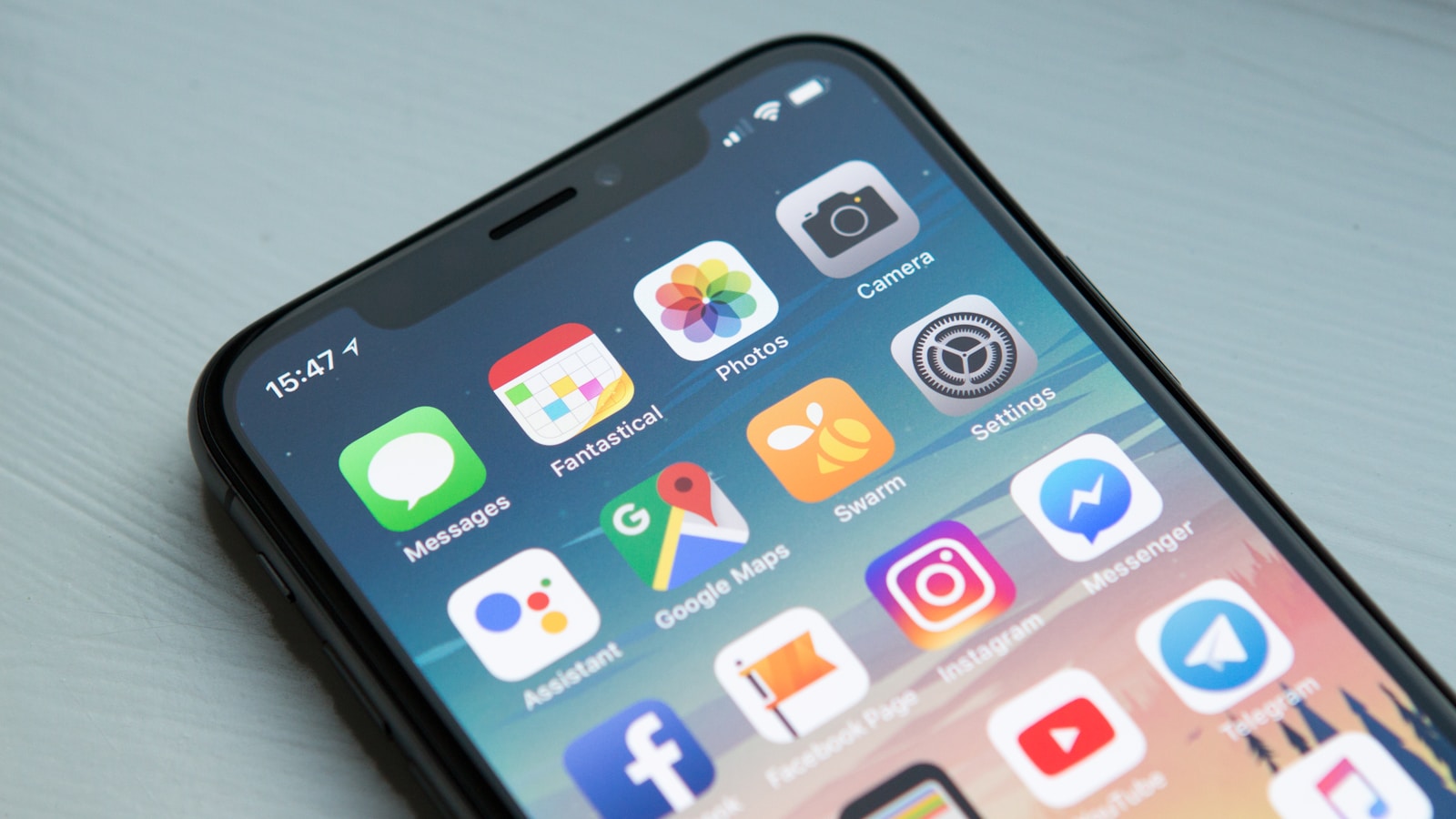
Removed every guardrail from my iPhone. No app limits, no Do Not Disturb, all notifications wide open. Every ping, every badge, every alert - everything turned on and nothing filtered. Wanted to see what would happen when I gave my brain unrestricted access to the firehose.
Within 24 hours I was chasing signals that didn't matter. A text notification would pull me away from whatever I was doing, and before I'd finished responding I'd drift to Instagram, then email, then some article I didn't care about, then back to whatever I was originally working on having lost 20 minutes and most of my train of thought.
By the second day I couldn't hold focus on a single task for more than 10 minutes, and it wasn't because I was trying to be distracted - I was actively trying to concentrate and my brain wouldn't cooperate.
The most unsettling part was this wasn't a discipline failure. I've trained my entire life in one of the most demanding athletic environments on the planet. I spent 15 years building the kind of mental focus that let me make split-second decisions at 35 mph with five other skaters trying to take my line. Discipline isn't the issue for me.
This was conditioning - my brain had been quietly trained by the device to seek instant reward instead of sustained effort, and when I removed the guardrails, the conditioning became impossible to ignore.
During my competitive years, the reward system was brutal but honest. You trained for months, sometimes years, for a single race that lasted 90 seconds. The dopamine hit came after the work, and it came because the work was real. You'd stand on the starting line having done thousands of intervals, hundreds of film sessions, and then the gun went off and either all that preparation paid off or it didn't. The gap between effort and reward was massive, and that gap is what made the reward meaningful.
Now think about what the phone does. Notification arrives, you check it, tiny hit of stimulation. You scroll, another hit. Someone likes a post, another hit. Gap between stimulus and reward has been compressed to zero, and your brain learns that pattern fast. Why wait months for a meaningful reward when you can get a micro-reward every 30 seconds by picking up the device?
Over time - and I think this is the part most of us underestimate - that compression doesn't just change your relationship with your phone. It changes your relationship with effort itself. The brain recalibrates what "rewarding" feels like, and suddenly things that used to be satisfying - finishing a hard project, pushing through a difficult training block, sitting with a complex problem long enough to solve it - start feeling like they're not worth the investment. Payoff doesn't feel big enough anymore because your baseline for stimulation has shifted.
This connects to something I hear constantly from leaders and teams I work with. People describe their motivation as "fractured" or "inconsistent" and they assume the problem is internal - not enough willpower, not enough passion, not enough grit. Sometimes that's true.
But more often, what I'm seeing is a reward system quietly recalibrated by years of micro-stimulation, and the person doesn't even know it's happened.
The executive who can't start strategic planning work they know is important - it's not they don't want to do it. Their brain has learned to prefer the easier reward of clearing email or responding to Slack, because those tasks deliver constant micro-hits of completion and strategic work delivers nothing for hours. Same brain, same person, same ambition. Different reward architecture.
The young athlete who trains hard but reports feeling less satisfied by training than they did a few years ago - that's not always burnout. Sometimes 3 hours of daily social media has recalibrated what "rewarding" feels like, and delayed gratification of physical training can't compete with instant gratification of the feed.
I'm not saying screens are evil. But we need to be honest about what's happening underneath the convenience, because the cost isn't visible until it is.
What I took away from those three days wasn't just "phones are bad" - that's too simple and not that useful. What I learned was the brain's reward system is trainable in both directions, and most of us are training it in the wrong direction without realizing it.
Every time you reach for the phone during a difficult task, you're doing a rep. Every time you choose micro-reward over sustained effort, you're strengthening one neural pathway and weakening another. Those reps compound. Eventually they produce a brain that struggles to do hard things - not because the person is lazy but because the circuitry has been remodeled by thousands of tiny choices that didn't feel like choices at the time.
The good news - and I've seen this both in my own experience and in teams I work with - is the retraining works the other way too. You can rebuild the effort-to-reward pathway deliberately. It's not fast and it's not comfortable, but it works.
After the experiment I rebuilt my phone environment from scratch. Not in some dramatic digital-detox-go-live-in-the-woods way - deliberately.
Notifications off for everything except calls and texts from people I know. App limits back on. Phone physically out of the room during deep work blocks.
But the bigger change was internal. I started treating focus blocks like training sessions. 15 minutes of single-task work at first, then 20, then 45. When the urge to check something came up - because it always comes up - I'd notice it and not act on it.
That's the rep. The moment where your brain wants the easy reward and you choose to stay with the hard thing instead.
Difference after even a few weeks was noticeable. Not dramatic, but real. Same person, same brain, different level.
Motivation isn't something you have or don't have. It's something your environment is either supporting or eroding every day, in ways you probably aren't tracking. And the first step is finding out what your brain has been trained to want vs. what you actually need it to want... I'm still calibrating that myself.
I go deeper on this in Hard Pivot.
--AAO
Subscribe and get Chapter 1 of Hard Pivot free.
No spam. Unsubscribe anytime.